
About Me
AI/ML Engineer building systems that survive contact with reality
Background
I'm Nour, an AI/ML Engineer based in the Bay Area. I graduated from UC Berkeley in December 2024 with a B.S. in Applied Mathematics and Data Science. Yes, I voluntarily chose to do math for four years. No, I don't know what's wrong with me either.
My path into AI started at Berkeley's Redwood Center for Theoretical Neuroscience, where I worked on bio-inspired optimization networks. The short version: I studied how the brain solves hard problems and tried to steal its tricks. Specifically, I used oscillatory dynamics to tackle combinatorial optimization problems that would take traditional computers an unreasonable amount of time to brute-force. That research taught me something I still think about: sometimes the smartest solution is letting a system find its own equilibrium instead of micromanaging every step.
At Berkeley, I lived at the intersection of applied math, data science, and machine learning. The math gave me intuition for why things work. The data science made me useful. The combination means I can build systems that are both theoretically sound and don't fall apart when they meet real data.
Technical Philosophy
Here's what I've learned: the gap between a working model and a working system is where most ML projects go to die.
Getting a model to perform well on a test set is the easy part. The hard part is building something that doesn't break when it meets messy data, weird edge cases, and stakeholders who keep changing their minds. That's what I actually care about. Systems that work in the real world, not just in a notebook.
When I tackle a problem, I start with a basic question: what decision is this actually supposed to help someone make? What happens if I'm right? What happens if I'm wrong? Those answers shape everything, from architecture to how paranoid the error handling needs to be.
I'm drawn to problems that are hard for interesting reasons. Forecasting demand for parts that sell three times a year. Coordinating multiple agents that each have incomplete information. Making models useful when your data looks like swiss cheese. These are problems where thinking beats throwing more GPUs at it.
On the side, I build AI projects that poke at the edges of what's currently possible. I'm less interested in "can AI do this thing everyone knows it can do" and more interested in "where exactly does this break, and why?" Finding those boundaries is how I figure out what's actually worth working on.
Current Work & Interests
I'm currently at OptiU (formerly Seeloz), a supply chain optimization startup where I build production ML systems. It's the kind of work where "it works on my machine" is not an acceptable answer.
Most of my focus is on demand forecasting and inventory optimization, specifically for intermittent demand. This is a fancy way of saying: parts that nobody buys for six months, and then suddenly everyone needs them yesterday. Traditional forecasting methods are basically useless here. The cost of being wrong is also not symmetric. Too much inventory and you're paying to store things nobody wants. Too little and some factory somewhere grinds to a halt because they're missing one $50 part.
I've built forecasting systems using pretty much everything: SBA for sparse demand, XGBoost for pattern recognition, SARIMA when seasonality matters, Prophet, Random Forest, and LSTM when I want to feel fancy. The stack is PyTorch, MLflow, and AWS SageMaker.
The results I'm proud of: 18% better forecast accuracy, 32% less excess inventory, and impact on millions in inventory decisions. I've also built multi-agent orchestration systems and replenishment pipelines that factor in lead times. Plus the usual startup chaos of managing interns, building internal tools, and putting together proof-of-concepts for potential clients on short notice.
Research Interests
I spend a probably unhealthy amount of time thinking about reasoning, agents, and interpretability.
Reasoning models are fascinating because they're a real shift in what AI can do. Chain-of-thought, process reward models, self-verification: these approaches are starting to look less like pattern matching and more like something you could call thinking. I've been following the debate about whether models can actually catch their own mistakes. The jury's still out, but it's one of the most interesting questions in the field right now.
Agentic AI is the other rabbit hole I keep falling into. How do you build systems that can plan, act, adapt, and not immediately do something stupid? What does coordination look like when you have multiple agents with incomplete information? My supply chain work is basically a constrained version of this: lots of interdependent decisions spread across time and space.
I still think about the bio-inspired stuff from my Redwood days. There's something elegant about systems that produce complex behavior from simple local rules. The brain solves optimization problems that should be computationally intractable. I'm curious whether we're leaving performance on the table by not borrowing more of those ideas.
I also care about the boring-but-essential stuff: uncertainty quantification, calibration, knowing when your model doesn't know. Not glamorous, but you can't build trustworthy systems without it.
Beyond Tech
I lift. Currently chasing some specific strength goals and learning that progress is much slower than my ego would prefer. But there's something honest about training: either you can lift the weight or you can't. No talking your way out of gravity. It's a good reset from work where everything is ambiguous and feedback takes months.
I read a lot. History, strategy, science, the occasional novel when someone recommends one aggressively enough. Reading is how I find ideas I wouldn't come up with on my own and realize how many of my opinions are probably wrong. Here are some books I've read:
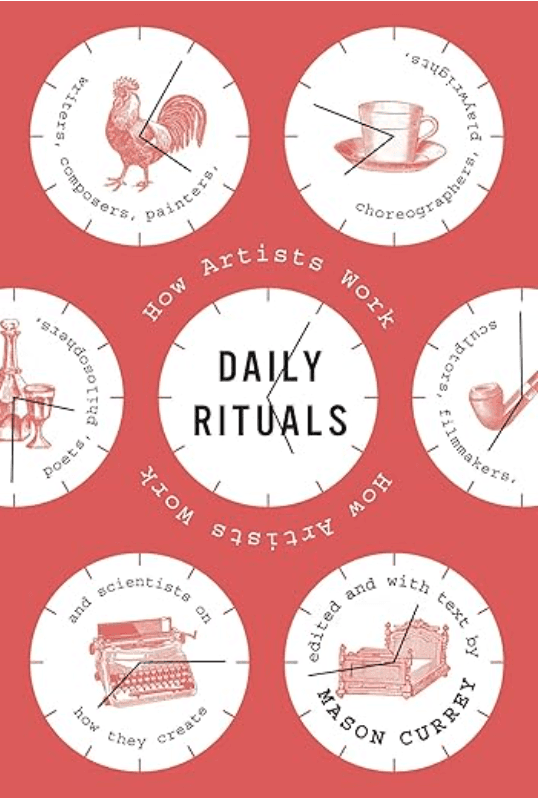

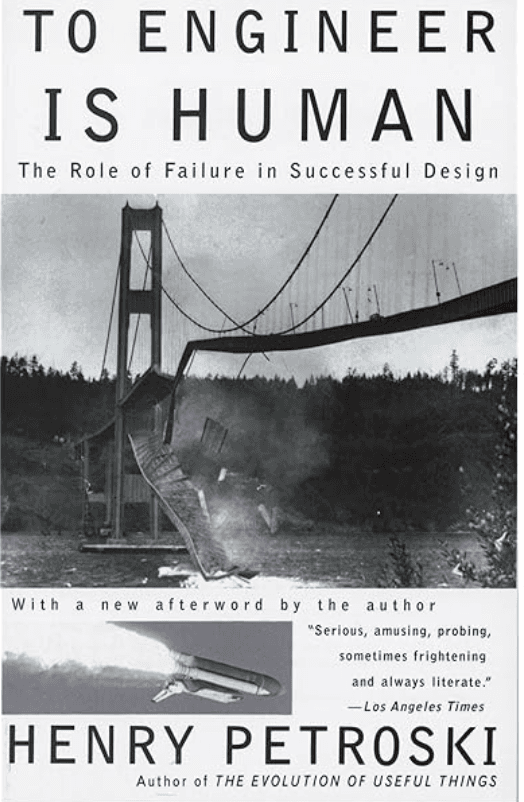
I'm also trying to memorize every capital and flag in the world. This started as a joke and became an actual project. I can now identify most flags on sight and I'm dangerously close to finishing the capitals. It's turned into a genuine interest in geography and geopolitics. Turns out where places are and what they look like tells you a lot about how they work. Here are some cool flags:

Zheleznogorsk, Russia

Dnipropetrovsk Oblast

Isle of Wight
I travel whenever I can. Not the "Instagram highlights" kind of travel, but the "get lost, eat something unidentifiable, try to figure out how this place actually functions" kind. Some of my clearest thinking happens when I'm somewhere unfamiliar and all my usual routines are useless. Here are some cool travel photos:



I have a background in religous scholarly literature and still spend time with classical texts. It's a completely different way of thinking, rigorous but aimed at questions that code can't answer. Good for perspective.
What drives me is building things that actually matter. I have zero interest in incremental features or optimization for its own sake. I want to work on hard problems where getting it right changes something real.
What I'm Looking For
I'm looking for AI/ML engineering roles where the problems are hard and the impact is real.
The stuff that excites me: reasoning and cognitive architectures, agentic systems, multi-step planning and coordination, production ML for high-stakes decisions, and making models reliable enough that you'd actually trust them.
I want to work with people who ship. Where building and deploying is the default, not something that happens after six months of meetings. I want teammates who are better than me at things I want to learn. I want the bar to be high.
Research lab working on reasoning? Startup building AI infrastructure? Company applying ML to hard industrial problems? I'm interested if the work is real and the people are excellent.
If any of that sounds like what you're building, reach out. I'm always down to talk about hard problems. Or flags. I know a lot about flags now.